
AI character pose consistency
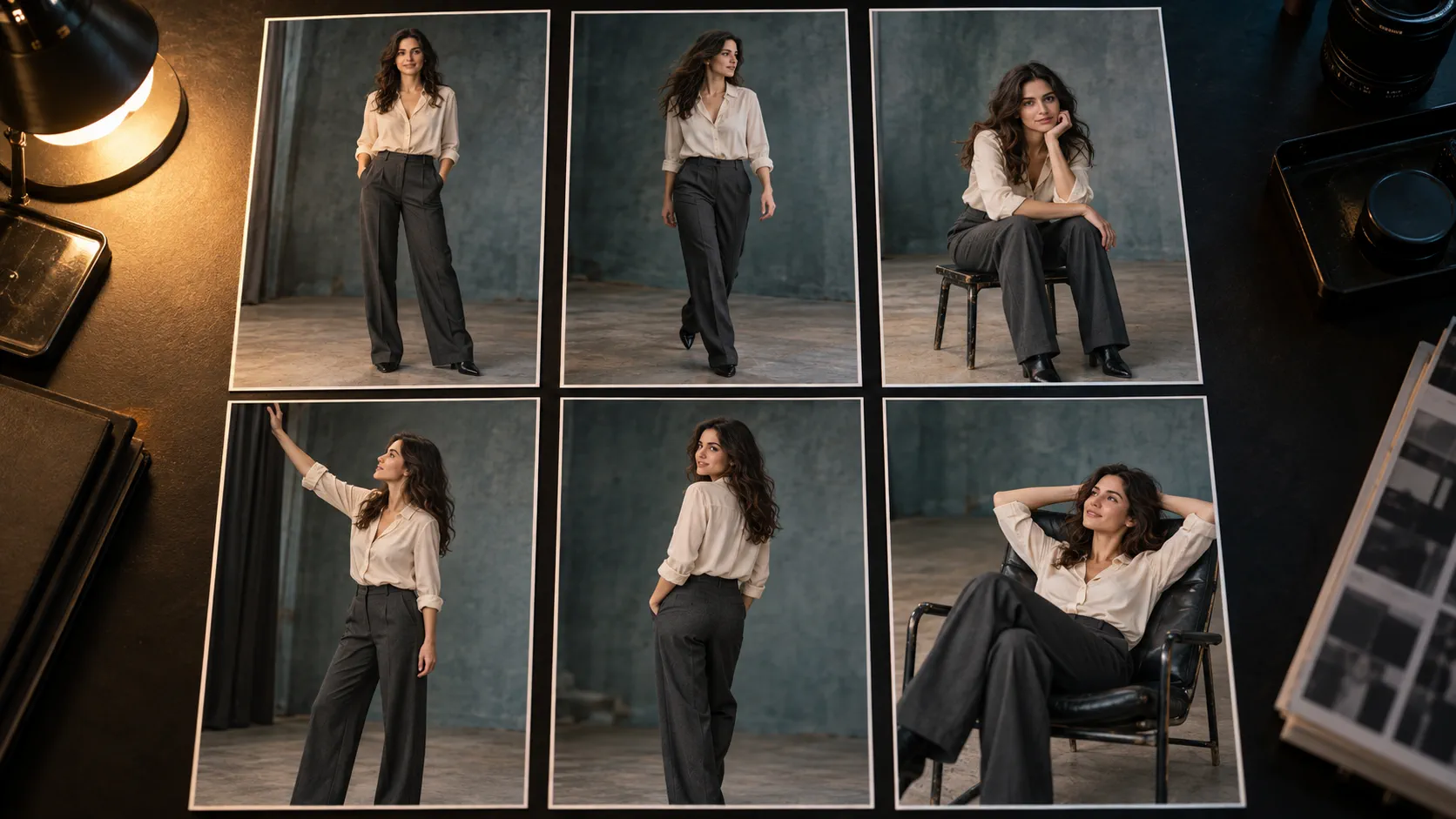
Keep one fictional actor recognisable through walking, sitting, reaching and turning by separating identity from performance and testing six controlled poses.
What is AI character pose consistency?
AI character pose consistency keeps the same person recognisable when the body changes position. The face, hair, age, body proportions, wardrobe and defining details remain stable while the character sits, walks, reaches, turns or moves through a scene.
This is harder than repeating a portrait because a new pose changes silhouette, fabric folds and which part of the face is visible. A model can preserve a handsome face and still produce a different build, age or coat. Treat identity and pose as separate instructions, then test them together.
Use a character reference sheet to define the actor and the consistency prompt template for the fixed identity block. This page focuses on what changes when the character takes a new body pose.
Which variables should you separate in the prompt?
Separate the character contract from the performance contract. The character contract never changes: face, hair, age range, body proportions and wardrobe. The performance contract changes per frame: action, body angle, gaze, hand position, emotion and camera.
Write them as different sentences. If the identity and posture are tangled in one clause, every new pose can weaken the identity. A clean prompt says who the person is first, then what that person is doing, then where the camera is.
| Variable | Keep fixed | Change per panel |
|---|---|---|
| Identity | Face shape, eyes, hairline, age range and skin texture. | Expression and direction of gaze. |
| Body | Height ratio, shoulder width, build and posture baseline. | Standing, walking, sitting, reaching or turning. |
| Wardrobe | Colours, fabrics, collar, cuffs, footwear and accessories. | Natural folds and movement caused by the pose. |
| Camera | Lens family, contrast and location light. | Shot size, height and subject-to-camera distance. |
| Scene | Room, fixed props, palette and time of day. | Blocking and the point where the action happens. |
How do you build a pose set for one AI character?
Start with a neutral full-body reference against a simple background. Then test five poses that stress different parts of the model: walking, sitting, reaching, turning and relaxing. These reveal whether identity survives both silhouette changes and obscured views of the face.
Keep the location and wardrobe constant for the first pass. If the room also changes, you cannot tell whether a difference came from the pose, the outfit, the lighting or the set. Introduce production complexity after the actor holds in a controlled test.
- Approve one neutral full-body master with clear face, hair and wardrobe.
- Write a fixed two-sentence identity block and save it unchanged.
- Render a walking pose to test build, gait and coat movement.
- Render a seated pose to test compression of the torso and fabric folds.
- Render a reaching pose to test arm length, shoulder shape and hands.
- Render a turn and a relaxed pose to test profile and partial hidden features.
How should you write a pose-consistency prompt?
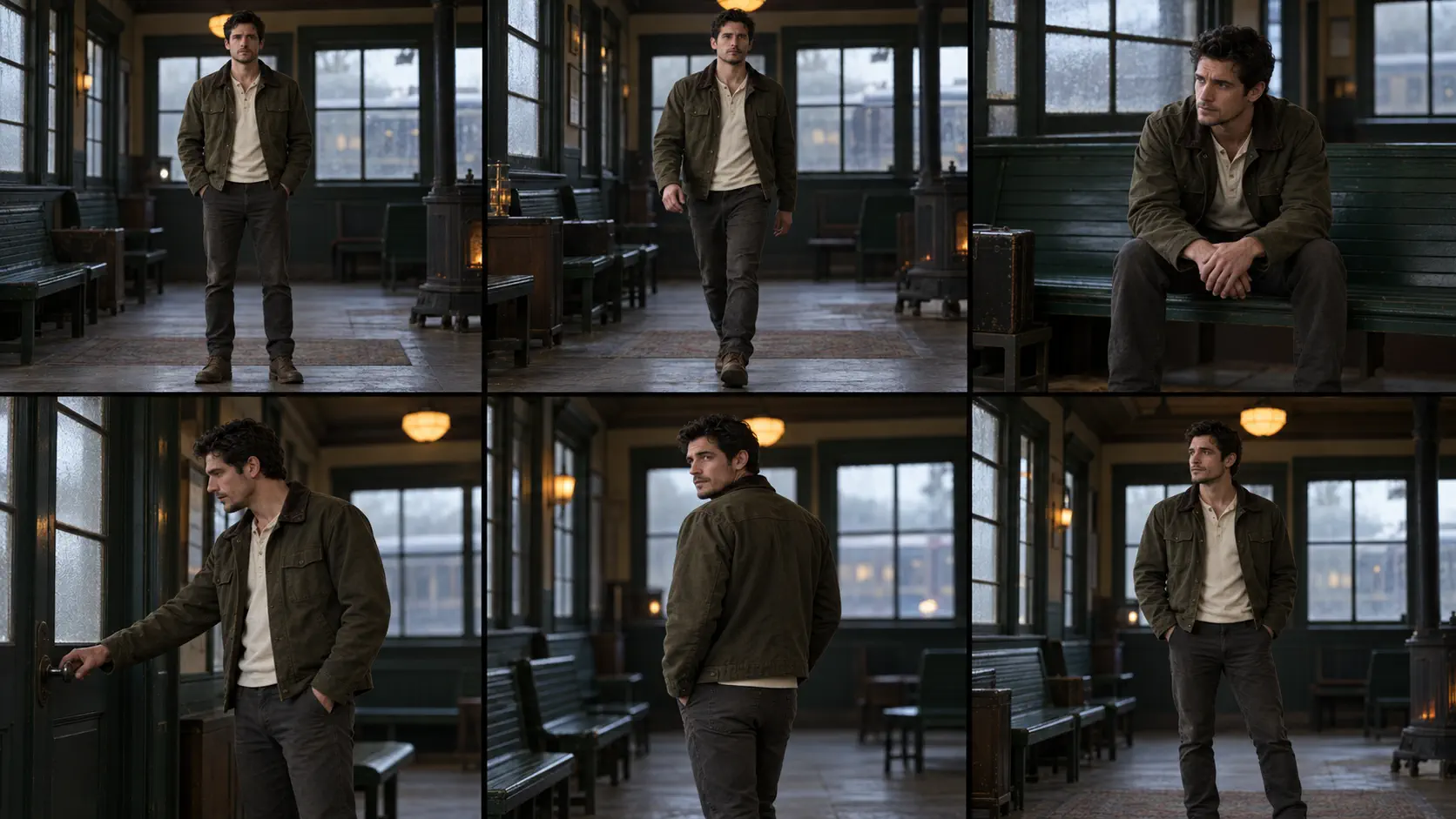
Write four blocks in this order: the fixed identity block, the wardrobe block, the pose and action, then camera and light. Repeat the first two word for word. Change the third block only enough to describe the new performance, and keep the fourth block consistent within the look test.
- Identity: “The same fictional woman in her early thirties, shoulder-length wavy dark hair, olive skin, oval face and natural texture.”
- Wardrobe: “Cream linen blouse, charcoal wide-leg trousers and black leather boots, exact same fit and colours.”
- Pose: “She turns her torso toward camera right, weight on the left foot, one hand pushing the door.”
- Camera: “Full-body three-quarter view, eye-level 50mm lens, shallow focus, same station window behind.”
- Light and texture: “Cool window light plus one warm overhead practical, protected highlights, fine 35mm grain.”
How do you test whether the same character survived the pose?
Review the six poses in a fixed order and compare one feature at a time. Start with silhouette, then face, then wardrobe, then hands, then light. Do not let a strong expression hide a change in build; check the shoulder-to-hip relationship and limb length at full-body size.
Put the accepted pose set beside the character reference sheet. If the pose test fails, return to the reference and identity block before adding new camera angles. The camera angle guide should be used only after the actor holds in a neutral camera position.
- Silhouette: does the same person read before the face is visible?
- Face: do the nose, jaw, eyes, hairline and age range remain stable?
- Body: are height, shoulder width and limb proportions consistent?
- Wardrobe: do the collar, cuffs, fabric and colours remain the same?
- Hands: are gesture and anatomy believable without extra fingers or wrist breaks?
- Performance: does the pose express a clear action without changing identity?
Why does the character drift when the pose changes?
Pose changes remove the easy landmarks that identity models rely on. A standing frontal portrait exposes both eyes and the full jawline; a turn hides one side of the face, and a seated pose compresses the body. The model fills the missing evidence with a new interpretation of the person.
Re-describing the face, adding new wardrobe details and changing the camera all at once make the drift worse. Keep the reference images clean and use several angles if available. Then describe the pose in physical terms rather than emotional ones: “one hand on the door, right shoulder forward” is more stable than “an enigmatic entrance”.
- Changing the age or build adjectives between prompts.
- Treating a face-only reference as proof of full-body identity.
- Adding accessories in one pose and omitting them in another.
- Changing lens and camera height at the same time as the action.
- Using contradictory physical instructions that the model must average.
How is pose consistency different from camera-angle consistency?
Pose consistency asks what the character’s body is doing. Camera-angle consistency asks where the viewer is standing. A seated character can be shot from eye level, above or below, and a camera can move around the same standing pose without changing it.
Fix the performance first, then move the camera. If the pose set fails, a new angle only gives you more ways to expose the same identity drift.
When the actor holds through all six poses, use the AI camera angle prompts to build coverage around that stable performance.
How do you use the pose test in a real sequence?
Approve the neutral master, then use Soul ID for the identity reference and Palette Lock for any accent colour. Build one scene with a doorway, a walk and a seated reaction so all three pose families appear in context. Keep the AI character consistency master prompt beside the pose prompts.
Frequently asked
How do I keep an AI character consistent in different poses?
Use a clean full-body reference, repeat a fixed identity and wardrobe block, and change only the pose and action. Test walking, sitting, reaching, turning and relaxing separately, then compare silhouette, face, body proportions and hands as a set.
Why does the face change when the AI character sits or turns?
A seated or turning pose hides facial landmarks and changes the visible jaw, eyes and hairline. The model fills those gaps with new information. Keep the identity sentence literal, supply multiple reference angles and avoid changing age, wardrobe and camera at the same time.
Should I use a reference sheet or a 3D model?
A reference sheet is enough to establish visual identity for stills. A 3D model can make reproducible body geometry easier, but it does not replace the wardrobe, lighting and prompt discipline needed for a convincing cinematic frame.
How many poses should I test before rendering a scene?
Six poses are a practical starting set: neutral standing, walking, sitting, reaching, turning and relaxed. Add any story-specific action, such as climbing, holding an object or sitting on the floor, once the basic identity holds.
How is pose consistency different from camera angle consistency?
Pose consistency controls what the body is doing. Camera angle consistency controls where the viewer stands. Fix the body performance and identity first, then change the camera height, distance or angle.
Your first cinematic frame is one prompt away
Sign in with Google, pick a plan and keep every still at the resolution the model produced. Plans from $12/month, cancel at any time. No watermark, no re-encode.