
AI character consistency
Why a face changes between frames, what a reference lock really pins, and the prompt habits that keep one cast across a whole sequence.
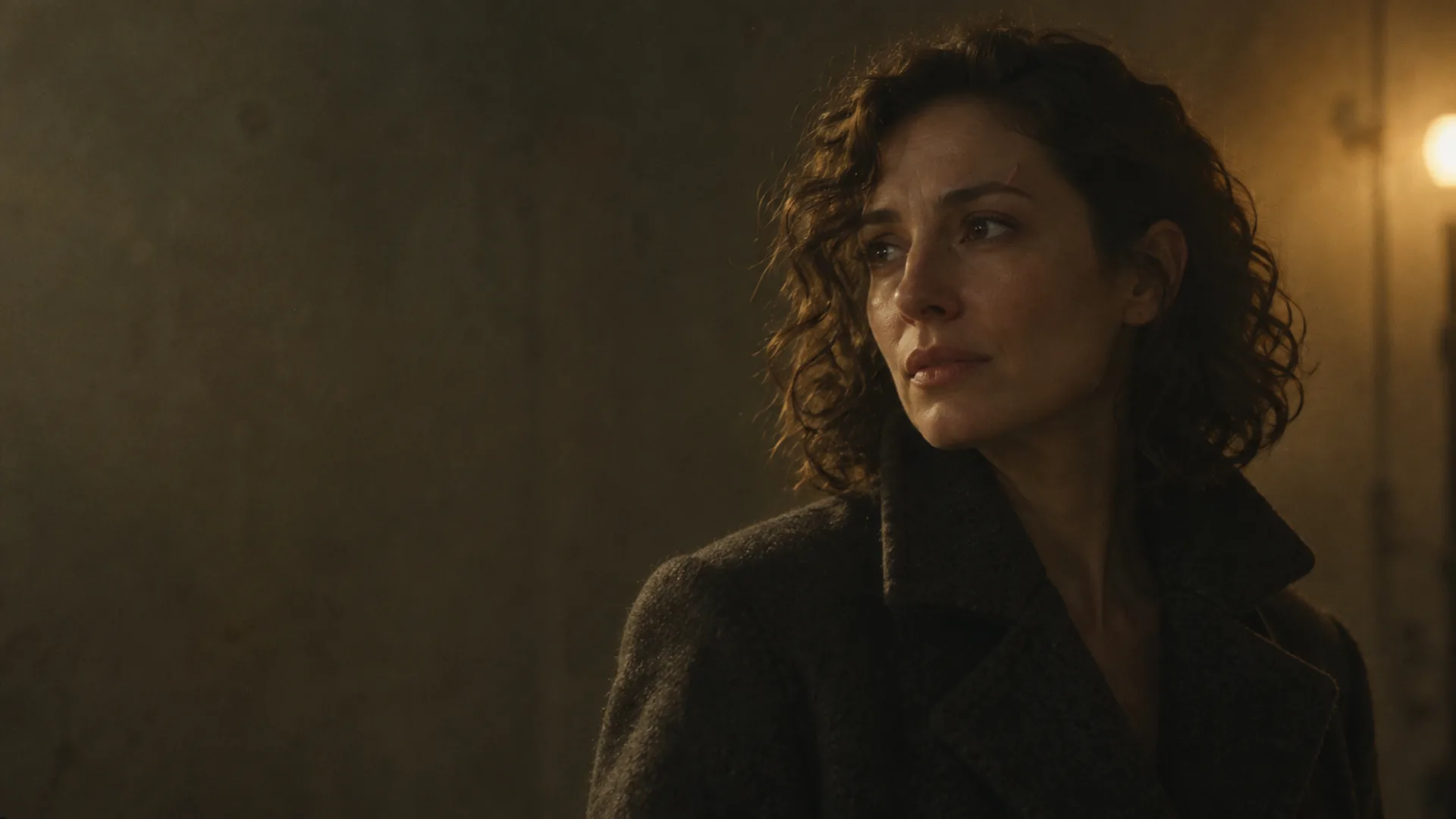
Why do characters drift between AI images?
An image model has no memory of the person you generated last time. Every render starts from the prompt and any reference you hand it, and re-samples the face from scratch. Small differences between two prompts — a different camera angle, a different phrase for the hair, one extra adjective — compound into a different person by the third or fourth frame.
Drift is easy to miss when you look at frames one at a time and obvious the moment you put them side by side. It is the same problem a real production solves with casting, continuity stills and a wardrobe department: something outside the frame has to hold the identity steady.
What does a reference lock actually pin?
In Soul Cinema the lock is Soul ID: you set a face and wardrobe reference once and every frame in the sequence is rendered against it, so the person stays the same across a change of angle, expression or lighting condition. A sequence holds up to six frames. Palette lock covers the other half of continuity — pin a hex value and it survives a re-render at a new size or angle, which is what stops a red from drifting to orange between setups.
What a lock does not pin is performance. Pose, eyeline, expression and which hand is holding the glass are all yours to describe, frame by frame. That is deliberate: you want the actor locked, not the scene.
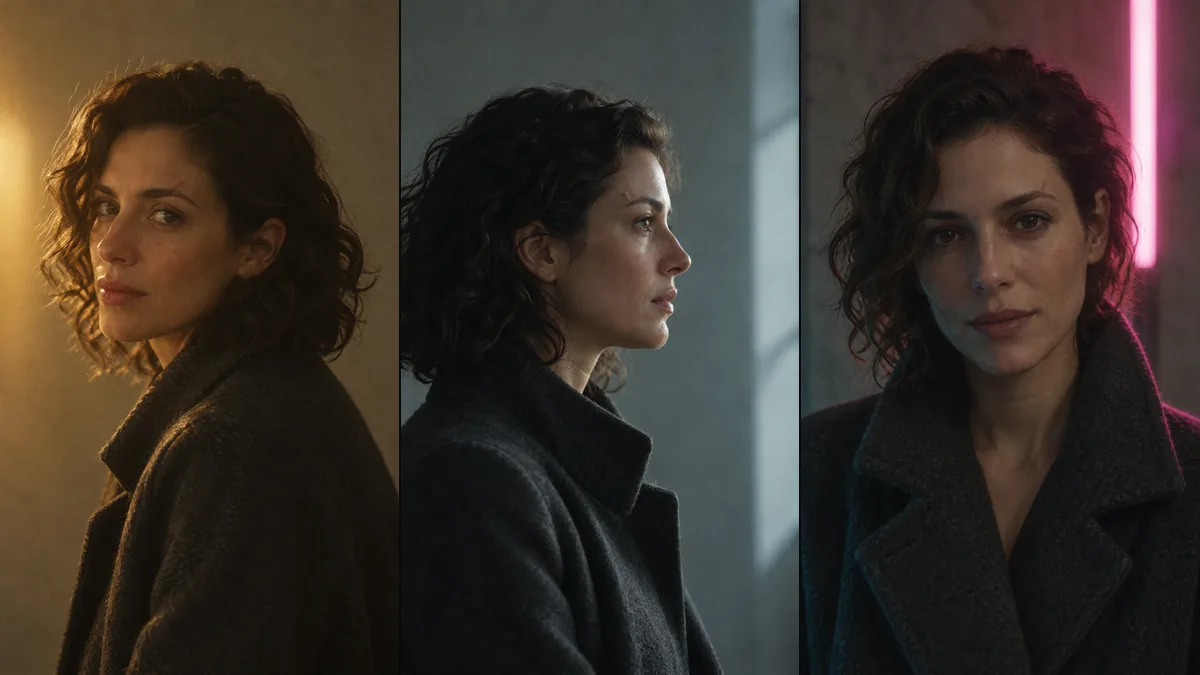
How do you prompt a consistent cast?
Write the person once, in one sentence, and reuse that sentence verbatim in every frame of the sequence. Name the two or three features that actually identify them — hair length and how it is worn, build, the garment and its collar — and leave the rest to the reference. The moment you re-describe the face differently between frames you are asking the model to choose between two people.
Then change only what a director would change between setups: framing, angle, which side the key comes from, expression. Keep the light brief and the stock language identical, because a shift from daylight to tungsten will read as a different day even when the face is perfect.
- One identity sentence, pasted unchanged into every frame.
- Two or three identifying features, not twelve.
- Change framing, angle and expression; keep cast, palette and stock fixed.
- Stay inside six frames before you start a fresh sequence against the same reference.
Which jobs need consistency across frames?
Any deliverable where the same person appears more than once and the audience is meant to read them as one character. Storyboards and shot lists, key art with a sequence of beats, look books and pitch decks, a campaign set that runs across placements, character sheets for a comic or a game, and covers where the same face carries a series.
The opposite case is worth naming too: if the person appears once, in one frame, a lock buys you nothing. Consistency is only the constraint when the deliverable has neighbours.
What breaks consistency?
Four things, in the order they usually bite. Changing the reference mid-sequence — even to a “better” frame — resets the identity. Mixing providers partway through, because a lock lives inside one model’s workflow. Jumping too far between setups, such as a full profile followed by an extreme close-up, which gives the model less to interpolate from. And overwriting the identity sentence, which is the most common cause of a drift nobody can explain.
There is also a quiet failure mode: over-describing. Piling on adjectives makes each frame a slightly different brief, and the model resolves the conflict by averaging. Fewer, more specific words hold the cast better than a longer paragraph.
Frequently asked
How many frames can keep the same character?
Soul Cinema holds one cast for a sequence of up to six frames via Soul ID. Longer sets work too — start the next sequence against the same reference and keep the identity sentence unchanged so the new block matches the previous one.
Do I need to upload a face reference?
You need one reference set for the person: face and wardrobe. Soul ID renders every frame in the sequence against it, which is what keeps the features stable when the angle or the lighting changes.
Does consistency survive a re-render at 8K?
Yes. The lock applies to the render, and palette lock keeps pinned colour values intact across re-renders at a different size or angle — which is the usual reason a colour drifts between two versions of the same frame.
Why does my character change between two very similar prompts?
Because the prompts are similar, not identical. One changed word about hair, age or wardrobe is enough for the model to re-sample a slightly different face. Reuse the identity sentence verbatim and change only the camera variables.
How much does a six-frame sequence cost?
Credits are charged per frame by output size: 2K costs 1 credit, 4K costs 2 and 8K costs 4. A six-frame 4K sequence costs 12 credits, which sits comfortably inside the Basic allowance of 120 credits a month.
Your first cinematic frame is one prompt away
Sign in with Google, pick a plan and keep every still at the resolution the model produced. Plans from $12/month, cancel at any time. No watermark, no re-encode.