
AI movie scene generator: every scene starts as one frame
Six scene briefs that read as film, the prompt lines that matter, and the honest handoff to video - a stills-first answer to the movie scene question.
What this actually generates
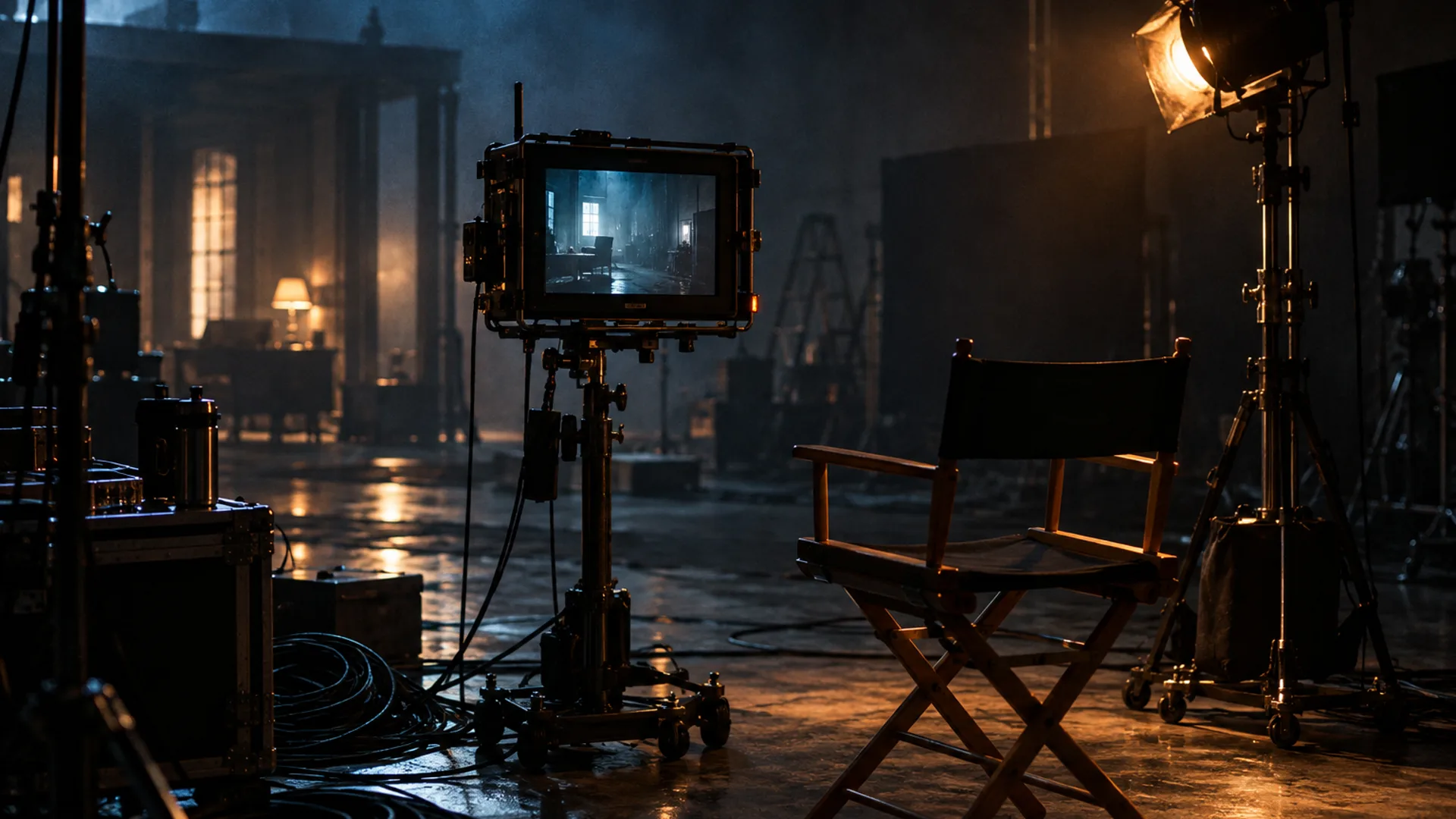
Searching for an AI movie scene generator usually means one of two jobs: a movie-like frame - a still that could be pulled from a film - or motion. This console does the first, through the Soul model family, and this page is honest about the handoff to the second: video is a separate step on a separate product, covered in the Cinema Studio guide.
The workflow treats every scene like a shot brief: subject, light, lens, palette, stock. Those five lines are what make a generated frame read as a movie scene instead of a picture of a person - and they are the same five lines the console asks for before it renders. The discipline behind them is the same one in film stills.
Scene briefs that read as film
Six archetypes cover most briefs. Each is written the way the console wants it - one decision per line, no adjectives without a job:
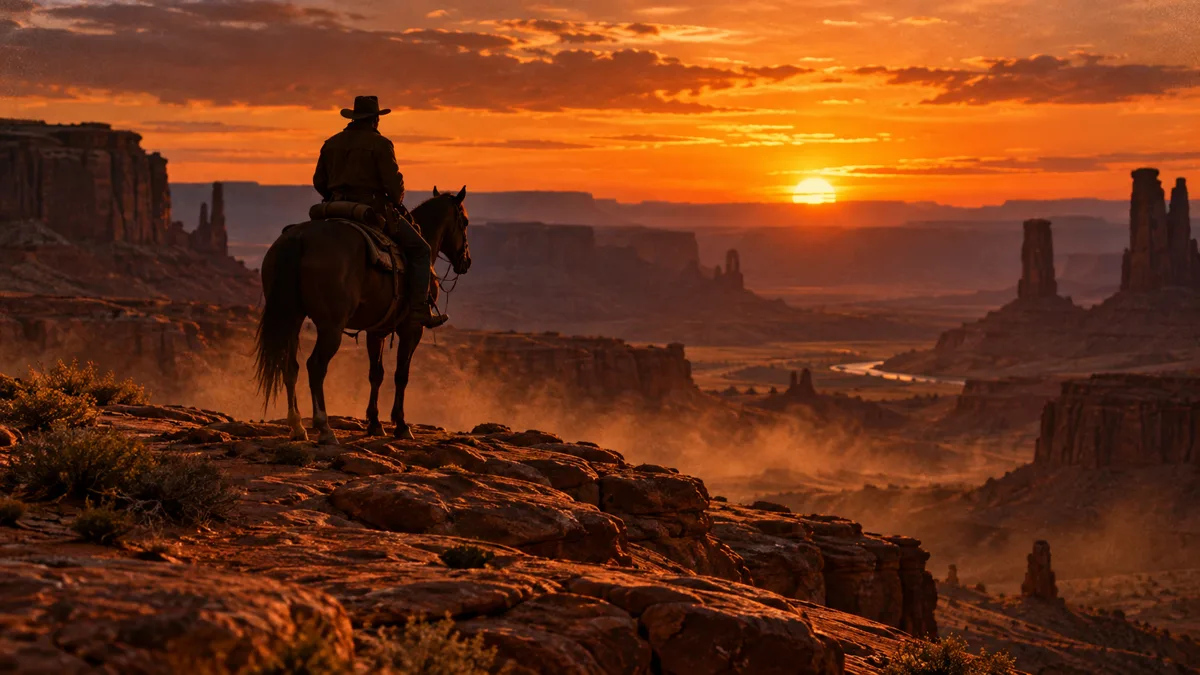
- Western street: rider at dusk, hard low sun behind, long shadows, 40mm, warm ochre palette.
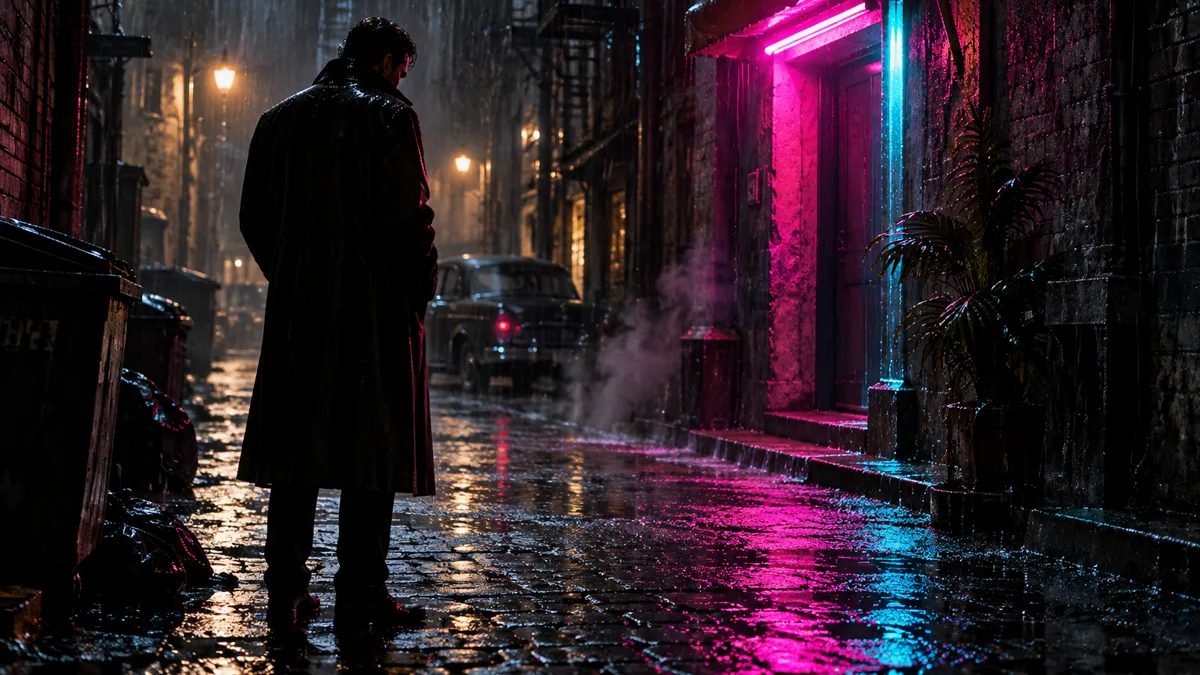
- Neon noir: figure under a sign in rain, two-tone magenta and cyan, wet reflections, 35mm anamorphic feel.
- Two-hander interior: two people at a table, one practical lamp between them, soft falloff into shadow, 50mm.
- Motel at dusk: lone figure at a door, warm window glow against a cold sky, one lamp post, wide 28mm.
- Rooftop dawn: figure pacing a city rooftop, blue-hour backlight, haze, telephoto compression.
- Corridor walk: figure mid-stride, source light from a doorway, hard floor streak, 35mm.
Why the still comes first
A scene on screen is one frame at a time, whatever it eventually becomes. Settle the look on a single still and everything downstream - more angles, a sequence, a motion pass - inherits a decision instead of reinventing one.
- One frame settles light, lens and palette before anyone commits to volume - the cheapest place to change your mind.
- A six-frame sequence reuses the same brief and changes one camera line per frame - the scene stays while the angle moves (see AI storyboards).
- Soul ID keeps one actor across scenes; palette lock keeps the colour.
The prompt lines that change the scene
Most generated scenes fail on a missing line, not a bad model. The lines that move the needle, in order:
- Light first - motivated source, direction, ratio: "single practical lamp, warm, from frame left, deep falloff."
- Then lens - a 28mm reads as an establishing shot; an 85mm reads as a portrait of the moment.
- Then palette - two colours maximum; a scene with five colours reads as a slideshow.
- Then stock - grain and halation are the "film" in a film still.
- One camera instruction per line - the model keeps what it can hold.
Free, paid, and the honest ledger
Free scene generators exist and are fine for a look test. What a free tier generally does not include is the part scenes need: a locked actor across frames, and a render cost low enough to iterate. Here a look test is a fraction of a sequence, failed frames are refunded automatically, and plans start at $12 a month - the arithmetic is on Is Soul Cinema free? and pricing.
When the scene has to move, the handoff is one frame: lock the cast, render the winning still, and use it as the start frame in a video model - Higgsfield’s own Cinema Studio or a Veo-class engine. The Cinema Studio guide covers that side honestly.
Frequently asked
Does this generate video?
No - this console renders stills, and that is a feature rather than a gap: a scene is decided as a frame first, and a still costs a fraction of a motion render. When the scene has to move, the winning frame becomes the start frame in a video model such as Higgsfield Cinema Studio.
Is there a free AI movie scene generator?
Free tiers exist on general platforms - terms change quickly, so check them directly. What a free tier rarely includes is scene discipline: a persistent actor across frames and re-render discipline. The cheap honest start here is the $12 plan, where a look test is a handful of credits.
What resolution do generated scenes come out at?
Native 4K renders. 8K exports are AI-upscaled from the native 4K render, and the metadata records both sizes so you always know what the model produced versus what was enlarged.
Can the same actor appear across different scenes?
Yes - that is what Soul ID is for: one face and wardrobe reference locked and reused, with a six-frame check to prove the character holds before you commit to a scene.
Do I own the frames?
You keep the rights to the frames you render, provided you hold the rights to the people and material you describe. The Max plan includes a commercial licence for client work.
Your first cinematic frame is one prompt away
Sign in with Google, pick a plan and keep every still at the resolution the model produced. Plans from $12/month, cancel at any time. No watermark, no re-encode.