
Cinematic locations: where the light comes from
Fifteen film-worthy settings — streets that bounce, interiors with built-in motivation, and edges of the world — and how to carry each one into a shot brief.
Why the location decides more than the backdrop
A location is a light plan in disguise. Choose a rain-slick alley and you have chosen reflections doing half the fill work; choose a diner booth and you have chosen one tungsten lamp at close range; choose an overcast coastline and you have chosen the flattest, most honest light in the world. The setting decides where the light comes from before the light line of the brief is even written.
That is why “a nice background” is the wrong way to pick one. The fifteen settings below are organised by the light they bring: streets that bounce and smear, interiors with built-in motivation, and edges of the world where the sky is the key.
Streets and crossings
Hard surfaces, practical sources and reflections everywhere — the most reliable film light in the world is a wet street at night:
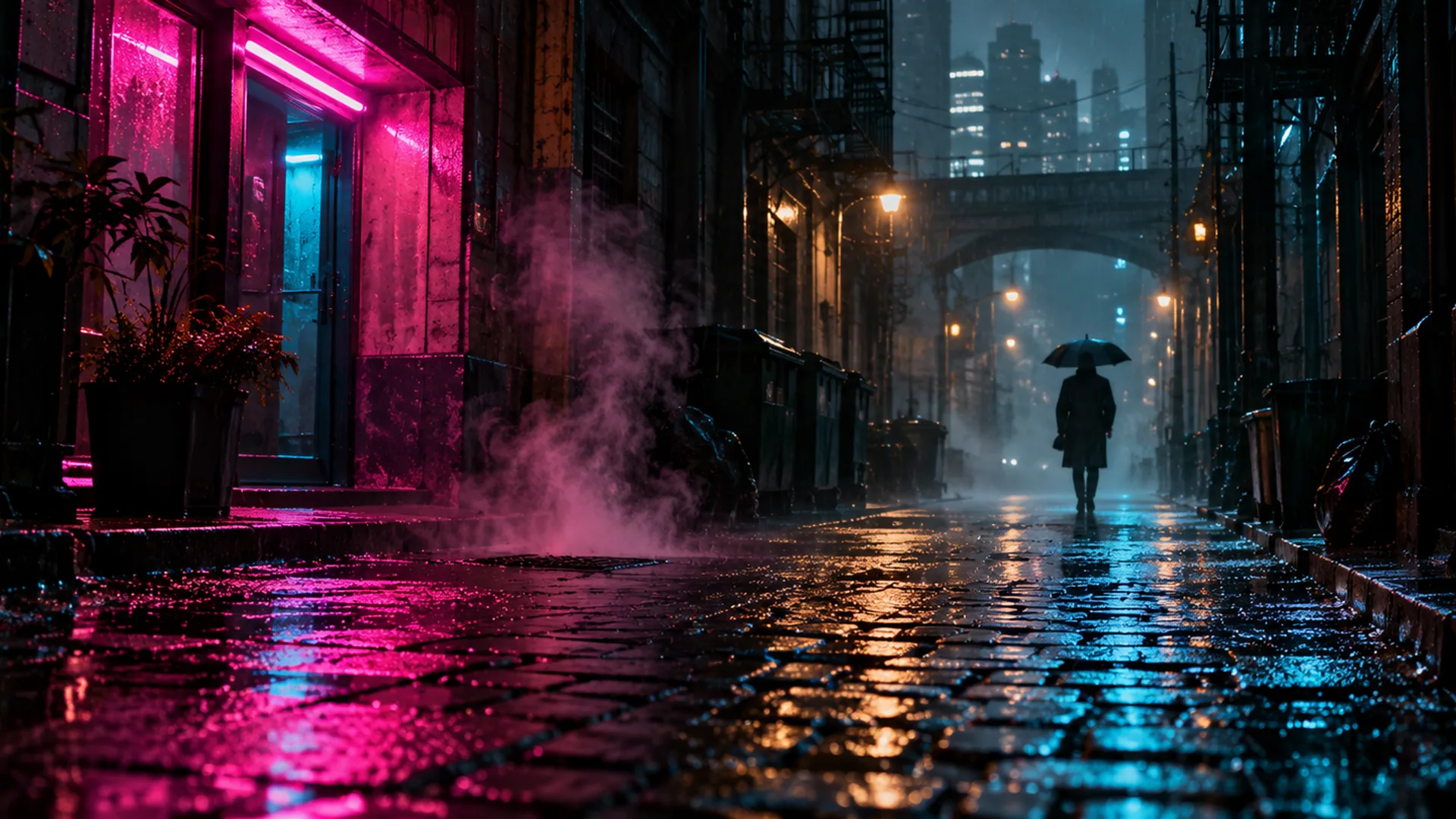
- Rain alley at night — one neon sign above a doorway, wet cobblestones carrying the magenta back up into the frame.
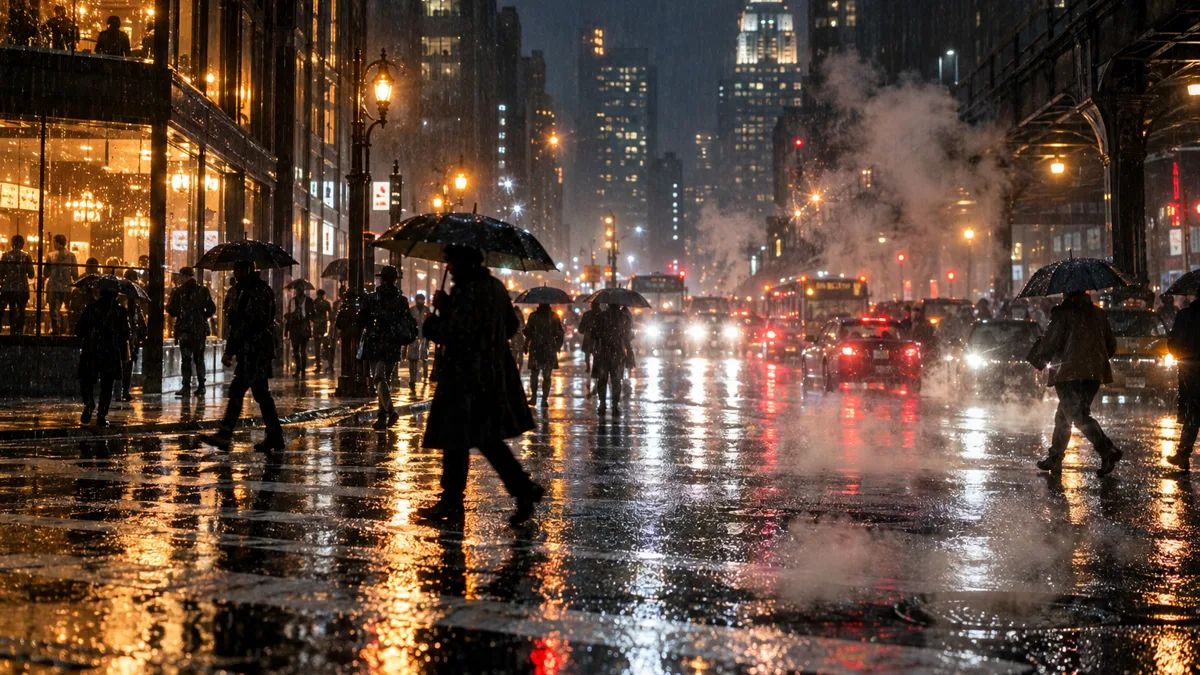
- Crosswalk after rain — headlights as the only key light, the signals stretching long reflections across the asphalt.
- Underpass — sodium lamps in a row, hard pools of light separated by real darkness; a figure walks from pool to pool.
- Night market lane — stacked practicals at every height, colour moving through the frame; the clutter is the light.
- Empty boulevard at dawn — no people, no cars, long cool shadows and a sky doing all the fill.
Interiors with built-in motivation
Interiors are easier in one way and harder in another: the light sources already exist, and every one of them tells a story.
- Diner booth — a single tungsten lamp over the table, everything beyond the booth falling away to near black.
- Motel room at night — a lamp by the bed, the window doing the rest; two colour temperatures meeting on one face.
- Old theatre — the screen itself as the only key light, rows of seats in silhouette.
- Laundromat — banks of fluorescents and a green cast that belongs to a decade more than a place.
- Train carriage at dusk — windows along one side, overhead strips along the other, a face travelling between them.
Edges of the world
The locations that work in the widest frames, where atmosphere — haze, dust, spray — is doing the diffusion:
- Desert road — one sun, one horizon, heat haze softening everything beyond the middle distance.
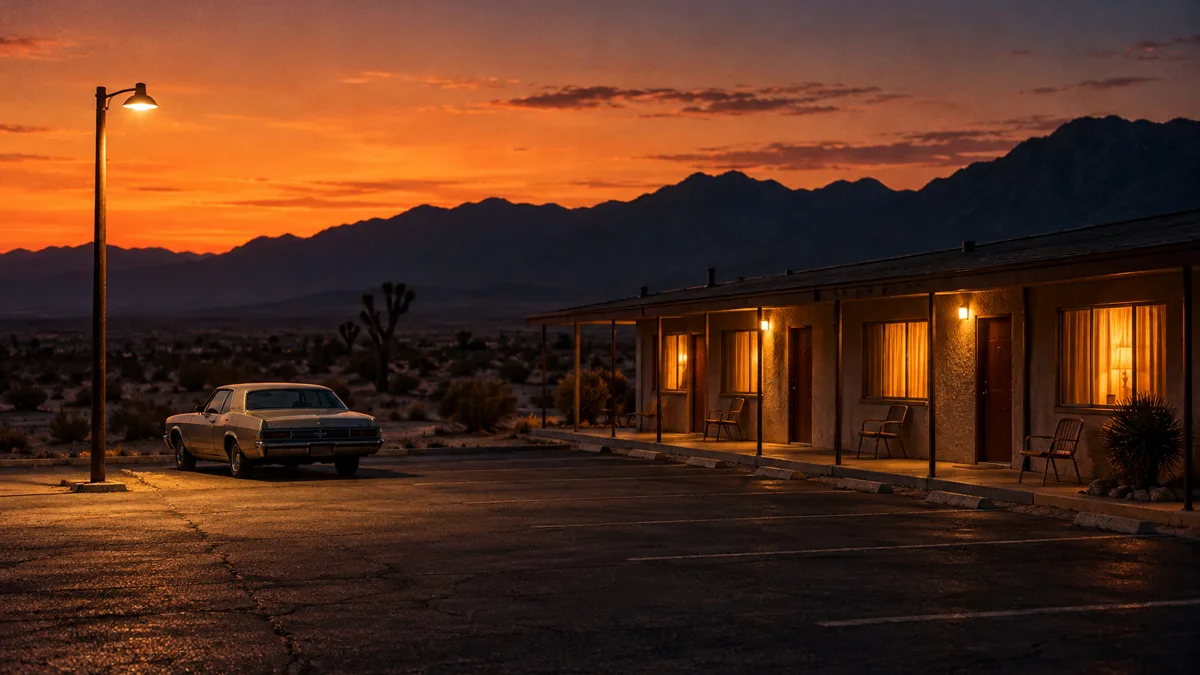
- Roadside motel at dusk — warm windows against a cooling sky, one lamp post carving a pool out of the parking lot.
- Harbour at blue hour — cold ambient light with one warm practical on a mast, and water that never stops moving.
- Forest edge — dappled light breaking a face into shapes; the trees decide the contrast for you.
- Coastline in overcast — the flattest light nature makes; with no shadow to hide in, the face becomes the contrast.
Writing a location into the five-line brief
The location lives inside the subject line, not in a line of its own. “A courier waiting out the rain under a bakery awning” is a subject that carries its location; adding the place to a separate line usually just restates the light. The structure itself is covered in Soul Cinema prompts.
Three habits keep a location stable: pick one detail the light touches — wet stone, dust, steam, condensation — and name it once; keep the place description verbatim across a sequence so the model does not re-invent the street; and let palette lock hold the grade while grain holds the texture. To push the light logic further, cinematic AI image prompts walks the light line itself.
Frequently asked
Do I need a real place name in the prompt?
No — and invented places often repeat better. A named landmark drags in whatever the model remembers about the real location; a described one — its light, its surfaces, one distinctive detail — can be reproduced exactly, frame after frame.
Which of these locations work in daylight?
Coastline in overcast, empty boulevard at dawn and forest edge are written for daylight. The night settings usually fail in daylight because the light source in the description — neon, headlights, the screen — stops making sense.
How do I keep the same location across several frames?
Keep the subject line verbatim and change only one camera line per frame, exactly as with a cast. Palette lock pins the colour values so the grade does not drift between the frames.
Can the model invent a location entirely?
Yes. Most of the settings above can be bent — move the diner into a bus station, the motel onto a cliff. The properties to keep are one dominant light source and one surface it interacts with.
What makes a location read as film rather than a backdrop?
Motivation and atmosphere. Something in the frame has to explain the light, and something in the air — haze, rain, dust — has to soften it. A place with those two properties will read as film in any model.
Your first cinematic frame is one prompt away
Sign in with Google, pick a plan and keep every still at the resolution the model produced. Plans from $12/month, cancel at any time. No watermark, no re-encode.