
Higgsfield Soul Cinema prompts, written like a shot brief
Five lines decide the frame: subject, light, lens, palette and grain. Here is how those lines work, which words actually move the light, and what flattens the result.
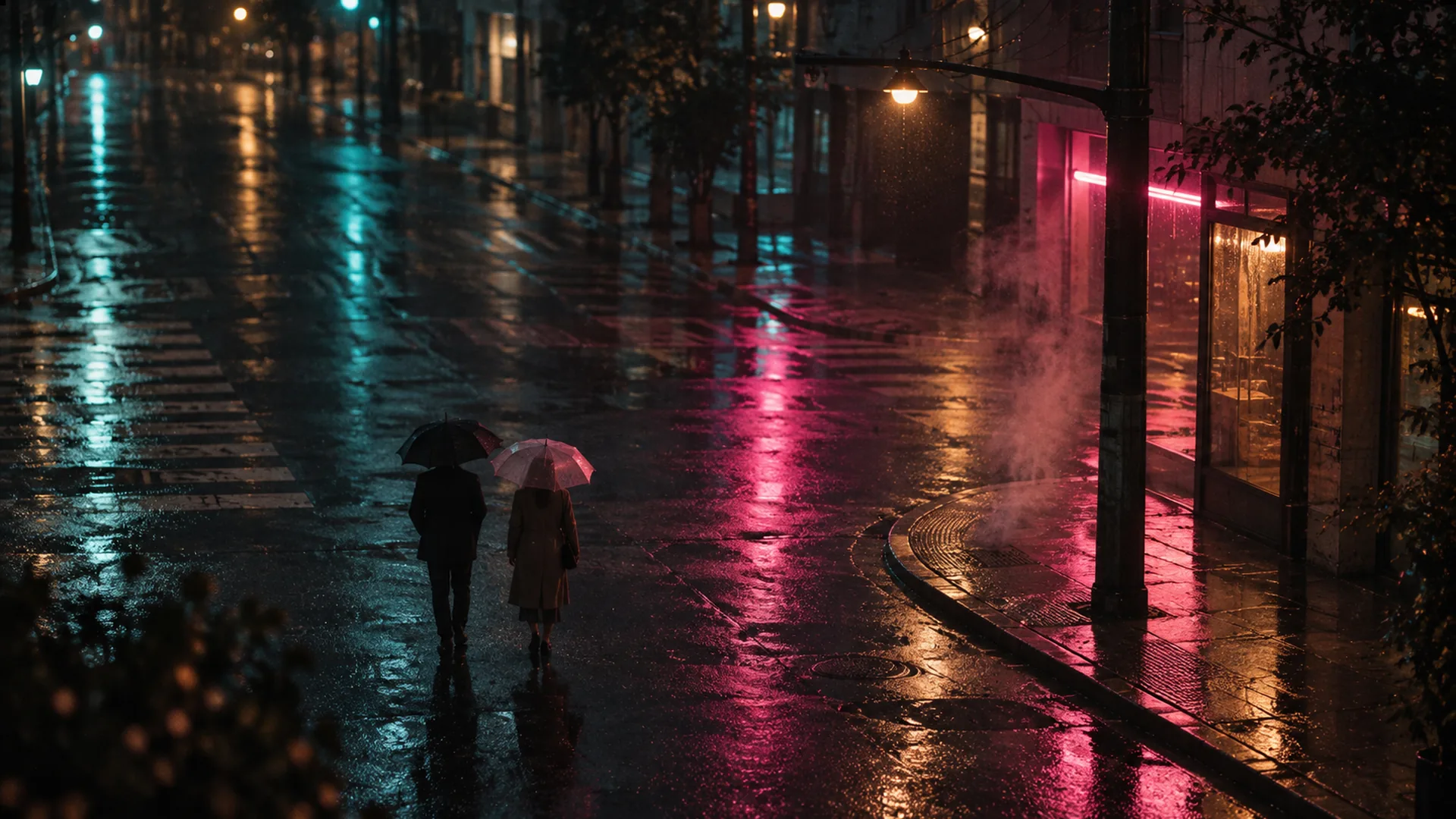
What is a Higgsfield Soul Cinema prompt actually asking for?
A Soul Cinema prompt is a shot brief, not a keyword list. It answers five questions in the order a cinematographer would ask them: what is in frame, where the light comes from, what lens is doing the work, what the frame is coloured like, and what stock or texture the result should carry. Everything you leave out is a decision the model makes for you.
The same structure travels: whether you are typing into Soul Cinema directly or reading the official Soul writing guide, the model rewards specificity about light and lens far more than it rewards adjectives. Words like cinematic, beautiful or 8K describe a feeling, not a setup, and they rarely move the frame.
If the naming itself is what you came for, Higgsfield Soul Cinema explains what the name refers to and how this site relates to it.
- Answer the five questions above in one or two sentences each.
- Name the light before you name the mood: mood follows light.
- Keep one look decided, not three: an averaged brief reads as an averaged frame.
How do you write a shot brief in five lines?
Write the brief as five short lines, one per decision. Line one is subject and blocking: two silhouettes under a red-lit tree, a woman half-turned away from camera, a car parked nose-out. Line two is light: direction, quality and time of day. Line three is lens and frame: 35mm, anamorphic flare, shallow depth of field, 2.39:1. Line four is palette: crimson key against a slate background. Line five is stock and texture: 35mm grain, muted highlights, no digital sharpening.
That is the whole brief, and it fits in a sentence you can edit one variable at a time. Change only line two and you get the same frame under different light, which is exactly how a look is tested on set.
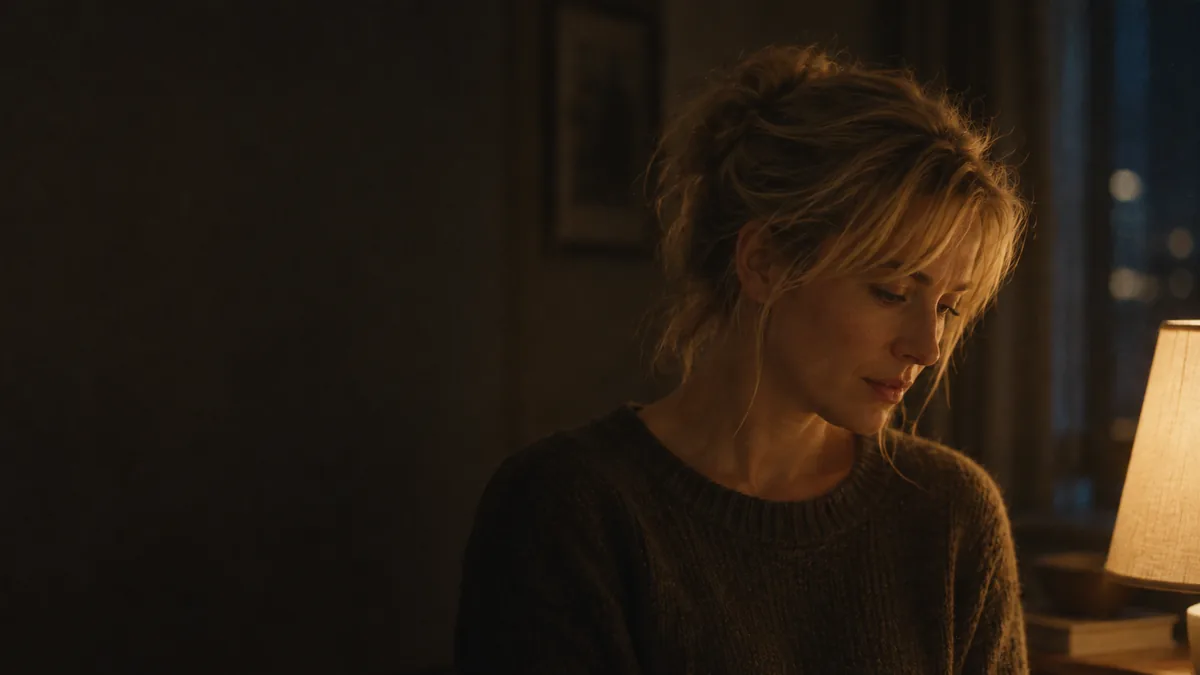
Which words actually change the light?
Light direction is the highest-leverage phrase in the whole brief. Backlit, side-lit from camera left, top-lit, under-lit by a practical: each of these produces a recognisably different frame, and each one also decides how readable faces stay in shadow. Quality comes second: soft diffused window light reads intimate, a single hard source reads graphic, and mixing the two without saying which dominates is what produces a flat result.
Colour temperature is the third lever. A tungsten practical sits near 3200K and a daylight interior near 5600K — those are the balances Kodak publishes for its Vision3 500T and 250D stocks. Saying where the warmth comes from — “the room is lit by one tungsten lamp, the window behind is cold daylight” — gives the model a motivated source instead of a colour cast.
- Backlit with a rim on the shoulders, face three stops down.
- Single soft source from camera left, fill almost gone.
- Hard sun through blinds across the wall, subject in the stripe.
- Neon sign as key, cool street light as ambient, no frontal fill.
How do you keep one look across a sequence?
A sequence only reads as one scene if three things stay pinned: the cast, the palette and the stock. Soul ID locks the face and wardrobe reference so the same person is rendered in every frame, up to six frames in a sequence. Palette lock pins a requested hex value, so a red stays the red you asked for when the frame is re-rendered at a different size or angle. Stock language — grain size, contrast, how far highlights roll off — carries in the brief.
Write the brief once, then change only the variables a director would change between setups: framing, angle, which side the key comes from. If line one and line five stay identical, the frames cut together.
What flattens a Soul Cinema frame?
Three failures show up again and again. The first is the averaged brief: three lighting setups named in one prompt produce a frame with none of them. The second is the adjective-only prompt: cinematic, moody and epic tell the model nothing it cannot already assume, and they tend to pull the result toward the bright, evenly lit default that general models are tuned for. The third is contradictory time of day, such as golden hour and blue-hour neon in the same line.
Over-stuffing has a cost too. A brief that names eleven props and four light sources gives the model more chances to invent, and the props it invents are rarely the ones you wanted. Name the two or three things that must be true and let the rest be scene dressing.
Frequently asked
How long should a Soul Cinema prompt be?
Long enough to answer five questions and no longer. In practice that is two to four sentences: subject and blocking, light direction and quality, lens and frame, palette, then stock and texture. Extra adjectives past that point tend to dilute the brief rather than sharpen it.
Do I need to include the word cinematic?
No. Cinematic is a conclusion, not an instruction. Describing the direction of the key light, the focal length, the contrast ratio and the grain gets you the finish that word is trying to buy.
Can I reuse the same prompt across different models?
The structure travels, the results will not be identical. Lighting, lens and palette language is portable; how strongly a given model obeys each instruction is not. Keep the brief and expect to adjust line two or three when you switch model.
How do I keep the same character in every frame of a sequence?
Lock the reference first (Soul ID in Soul Cinema) and then keep the description of the person identical across frames. Consistency breaks when the prompt re-describes the face differently between renders, not when the angle changes.
What does a sequence cost on Soul Cinema?
Credits are charged per frame by output size: 2K costs 1 credit, 4K costs 2 and 8K costs 4, and failed frames are refunded automatically. Basic is $12 a month for 120 credits, Pro $29 for 600 and Max $79 for 2,000.
Your first cinematic frame is one prompt away
Sign in with Google, pick a plan and keep every still at the resolution the model produced. Plans from $12/month, cancel at any time. No watermark, no re-encode.